
How to Automate Landscaping Customer Enquiries
Learn how to automate landscaping customer enquiries with AI, speed up response times, qualify better leads and protect profitable time for site work.
A homeowner sends an enquiry for a £40,000 garden build at 8.15pm on a Sunday. By Monday morning, they have contacted three other firms, received two replies and begun forming an opinion about who looks most professional. If you want to automate landscaping customer enquiries, this is the commercial reality to address: speed matters, but relevance and follow-through matter more.
For established landscape businesses, enquiry automation is not about replacing the personal service that wins quality projects. It is about removing the administrative drag between a prospect raising their hand and your team taking the right next action. Done properly, it gives good prospects confidence, stops leads disappearing into inboxes and protects directors from becoming the permanent switchboard.
Why landscaping enquiries need a different system
A landscaping enquiry is rarely a simple request for a price. A garden design-and-build prospect may have a vague brief, an unrealistic budget and a site that needs careful assessment. A grounds maintenance lead may need a contract start date, service frequency and proof that your business can cover several locations. A small paving repair may be useful only if it sits in the right geographic area or fills a gap in the programme.
That means the aim is not to respond to every lead in precisely the same way. The aim is to identify what the opportunity is, whether it fits your business, and what should happen next.
Many firms still rely on a website form, a shared email inbox and good intentions. Someone sees the enquiry between site visits, replies when they can, then tries to remember to chase it later. The result is uneven response times, incomplete information and a pipeline that depends on one or two people keeping everything in their heads.
Automation creates discipline around that process. It can acknowledge the enquiry immediately, gather the details your estimator actually needs, route leads by type and value, and trigger planned follow-up without making every contact feel like a generic marketing exercise.
Map the enquiry journey before you automate it
Technology will amplify a poor process just as efficiently as a good one. Before choosing software or building an AI assistant, map the route from first contact to booked survey, quotation and decision.
Start by reviewing the enquiries you received over the last three months. Which ones became worthwhile work? Which were unsuitable? Where did your team lose time? You may find that most wasted effort comes from a few repeated problems: enquiries outside your service area, budgets too low for the work involved, missing photographs, or customers expecting an immediate site visit before sharing even basic project information.
Your system should then define clear pathways. A substantial design-and-build enquiry may receive a tailored acknowledgement and a link to book a consultation once key details are supplied. A maintenance enquiry can be directed to a service-specific form with property type, postcode, frequency and site access questions. A low-value or out-of-area request can receive a courteous response that sets expectations without consuming estimating capacity.
This is a leadership decision, not merely an admin task. You are deciding where your business will invest its attention.
Set the questions that make a lead useful
The best enquiry form is not the longest one. It asks enough to enable a decision, without making a motivated customer abandon the process. For most landscape contractors, the essential information includes:
- the customer’s postcode and preferred contact details
- the type of work required, such as garden build, landscaping, maintenance or commercial grounds care
- a short description of the brief and the desired timescale
- an indicative budget range where appropriate
- photographs, measurements or a simple site plan where available
For larger projects, it is sensible to ask whether the client has professional drawings, planning constraints, access limitations or a target completion date. These are not barriers. They show that your firm runs a considered pre-construction process and respects the value of both parties’ time.
How to automate landscaping customer enquiries without sounding automated
The first response should be fast, clear and specific. An automated acknowledgement sent within minutes reassures the customer that their message has reached a real business. It should confirm what happens next, state the expected response window and, where useful, invite them to provide photographs or complete a short qualification step.
Avoid pretending that a bot has reviewed the garden or assessed the scope. Customers can spot empty personalisation quickly. Instead, use plain language: thank them for the information, explain that the team is reviewing the brief, and give a precise next action.
AI becomes particularly useful after that point. It can read free-text enquiries, identify likely project types, extract relevant details and draft a response for approval. It can also classify leads by criteria you set, such as location, stated budget, service line or urgency. A director or sales coordinator should still make the judgement call on significant opportunities, but they should not have to manually copy every enquiry into a spreadsheet first.
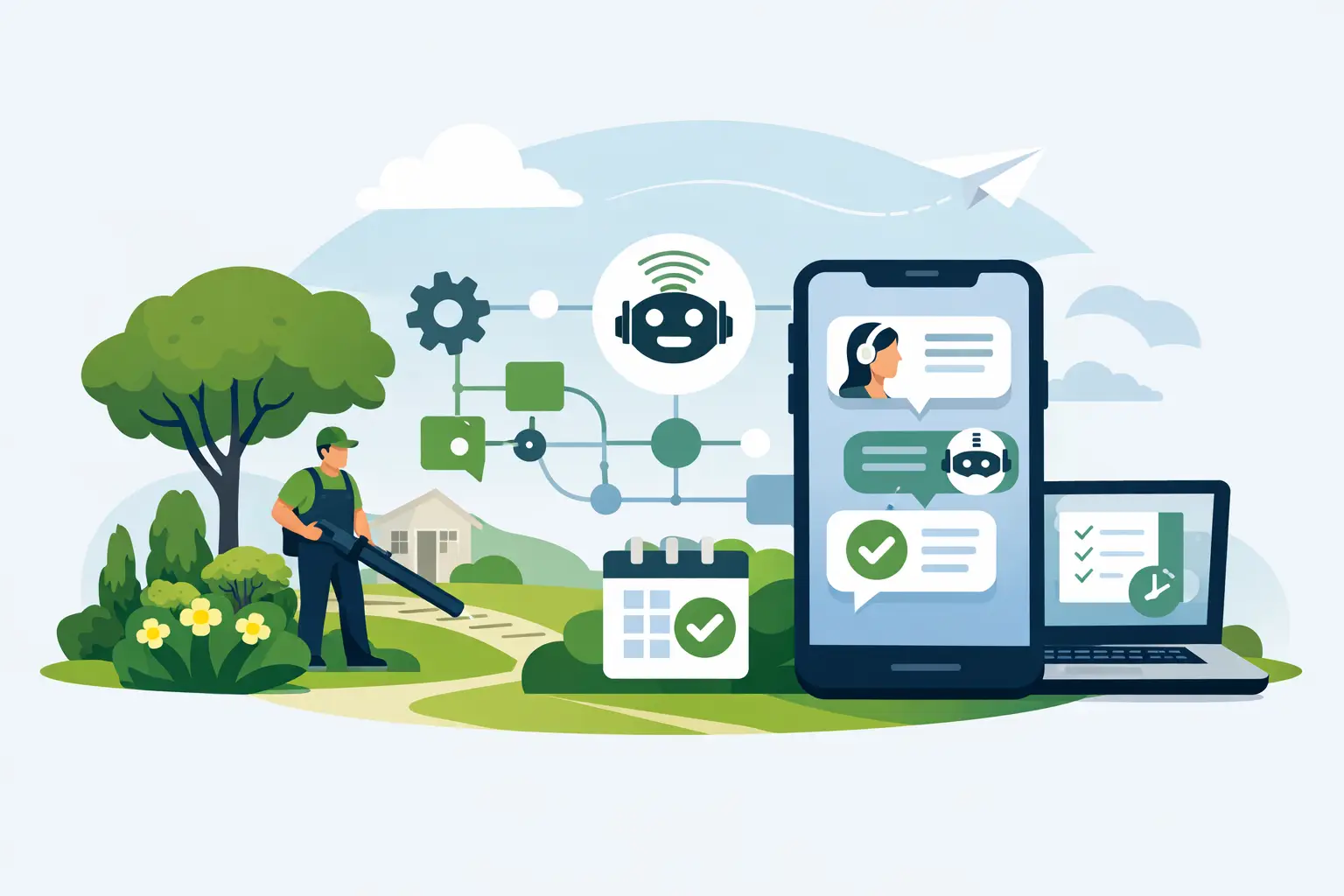
A sensible workflow might work like this. A form submission or email enters a central system. It receives an immediate acknowledgement. AI categorises the request and checks whether required information is missing. The lead is then assigned to the right person, placed in the correct pipeline stage and given a response deadline. If no action is recorded, the system sends an internal reminder before the lead goes cold.
That is not impersonal. It is more reliable than relying on a busy site manager to remember an email after a day of supplier calls, weather delays and client meetings.
Route high-value work to a human quickly
Automation should reduce delay, not create a maze. If a prospect appears to have a serious budget, is within your ideal area and wants the work in a realistic timeframe, give them a direct route to a conversation or consultation booking.
For design-and-build firms, this may mean offering a paid design consultation rather than a free site visit. The automated sequence can explain what the consultation covers, why it is the first stage of a professional project and how the fee is handled. This protects your expertise and filters out prospects who are simply collecting ideas.
For recurring maintenance and commercial work, the next step may be a site survey request. Here, automation can collect the address, decision-maker details, contract requirements and any health and safety documentation before a surveyor travels. The commercial gain is not just faster replies. It is fewer wasted journeys and better-prepared meetings.
Build follow-up around decisions, not pressure
A large share of profitable work is lost through weak follow-up rather than poor first contact. Customers get distracted, postpone a decision or assume the lack of a reply means you are no longer interested. A structured follow-up sequence corrects this without chasing people relentlessly.
After an initial enquiry, send a reminder if the customer has not supplied required details. After a consultation or survey, confirm the next milestone. Once a quotation is issued, schedule a measured follow-up that asks whether they have questions, rather than simply asking whether they are ready to proceed.
The timing depends on the service. A customer planning a garden transformation for spring may need thoughtful contact over several weeks. An urgent commercial maintenance requirement may need a same-day call. Automation should allow different sequences for different buying cycles, not force every lead into one generic pattern.
AI can draft follow-up emails using the project context, but every message needs boundaries. Do not allow a system to invent prices, promise start dates or offer technical advice that has not been approved. The commercial risk of an inaccurate automated answer is far greater than the time saved.
Measure what the system is changing
Do not judge enquiry automation by how many messages it sends. Judge it by whether it improves the quality and conversion of work entering your pipeline.
Track response time, the percentage of enquiries that become qualified opportunities, consultation or survey bookings, quotation conversion, average contract value and the source of your best leads. Also measure how long team members spend manually handling basic enquiries. If the system generates more appointments but most are unsuitable, the qualification stage needs tightening. If quality leads are still slow to receive a human response, your routing and accountability need attention.
This data also improves marketing decisions. You may discover that one source produces plenty of small domestic requests but little profitable work, while another produces fewer leads that convert into substantial schemes. The right automation does not merely tidy administration. It gives you better commercial visibility.
Protect customer data and team ownership
Customer details, site photographs and project notes must be handled responsibly. Use tools with appropriate permissions, keep access limited to the people who need it and make sure your privacy information explains how enquiry data is used. If you use AI tools, understand where information is processed and avoid placing sensitive material into systems without proper controls.
Equally, assign ownership inside the business. Every qualified lead should have a named person responsible for the next action, even if automation handles the reminders. Systems do not remove accountability. They make a lack of accountability visible.
The strongest enquiry process feels straightforward to the customer and controlled behind the scenes. Your prospects receive timely, relevant communication; your team sees the information they need; and you spend more time on the projects that fit your capability and margin targets. That is the standard to build towards: not more automated noise, but a landscape business that responds with the speed and discipline serious clients expect.
Want to apply these ideas in your landscape business?
Book a discovery call →