
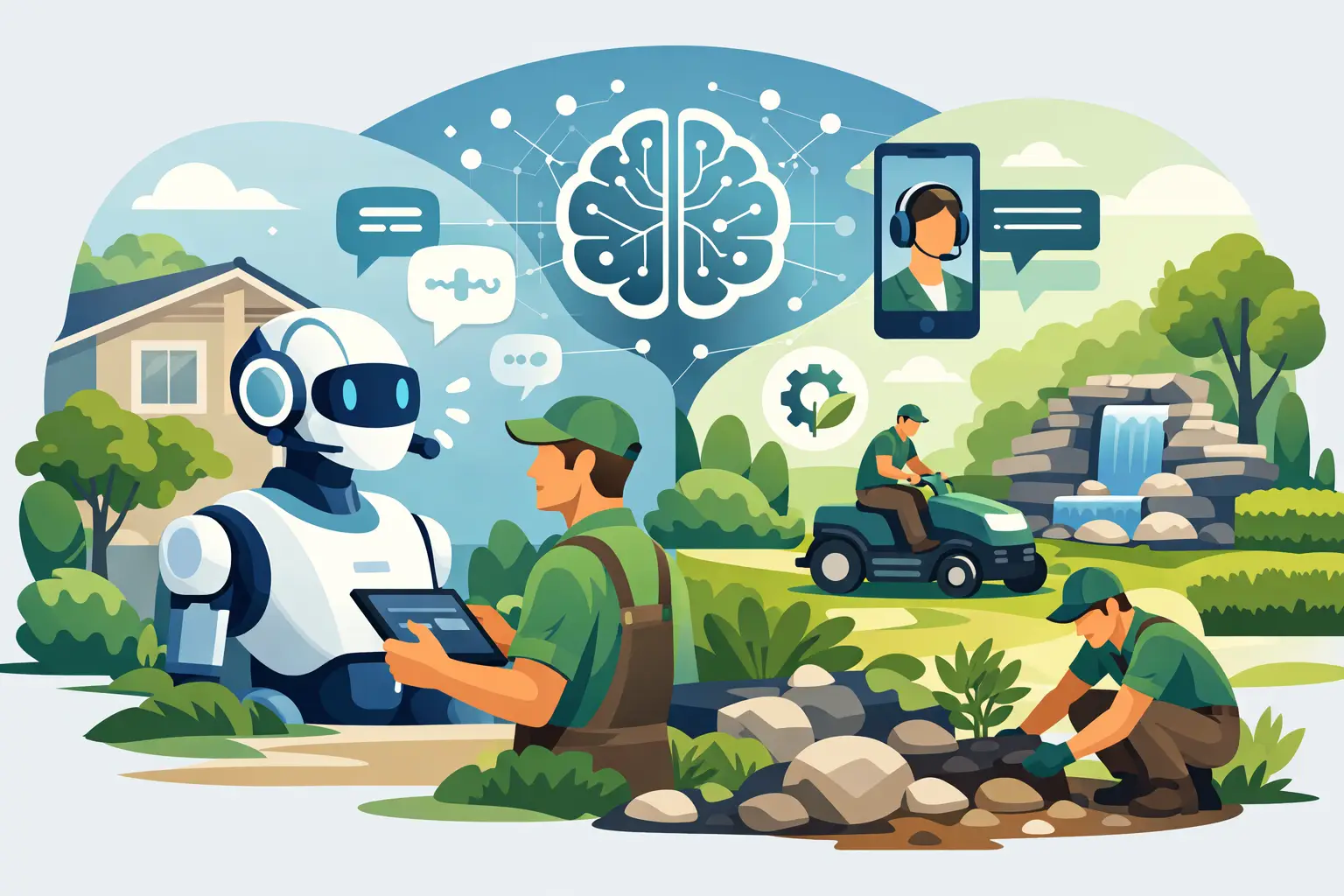
AI Customer Communication in Landscaping
AI customer communication in landscaping helps UK firms respond faster, protect margins and keep clients informed from first enquiry to final handover.
A homeowner submits an enquiry on Sunday evening for a new patio and planting scheme. By Monday lunchtime, they have contacted three firms. The business that acknowledges the brief clearly, asks the right qualifying questions and sets a credible next step will usually be in the strongest position before a site visit is even booked. That is why AI customer communication in landscaping is a commercial issue, not a novelty for the office.
For established landscape businesses, communication affects far more than customer satisfaction. It shapes lead conversion, quote acceptance, programme control, reviews, referrals and the amount of time an owner spends answering the same questions. Used properly, AI gives your team a better operating system for those moments. Used badly, it creates generic messages, false promises and a customer experience that feels automated for the sake of it.
The objective is not to remove people from the process. It is to make every important customer interaction faster, clearer and more consistent without losing the professional judgement that a quality landscape project requires.
Where communication costs landscape firms money
Most communication failures are not dramatic. They are small delays and omissions that accumulate. An enquiry sits unanswered because the team is on site. A prospect receives a short reply with no explanation of the process. A quote is sent without a persuasive cover message. A client is not told that rain has pushed work back by a day. The office then spends Friday afternoon chasing information that could have been shared at the right point in the job.
These gaps create uncertainty. In a competitive local market, uncertainty makes customers compare on price because they cannot see a meaningful difference in professionalism. It also puts pressure on site managers and directors, who become the default answer point for every query.
AI can help create reliable first drafts, classify incoming requests, pull together project updates and prompt follow-up. The value lies in reducing avoidable admin while raising the standard of communication across the customer journey.
AI customer communication in landscaping starts with the journey
Do not begin by choosing a tool. Begin by mapping the points at which a prospect or client needs information from you. For a design-and-build contractor, that may run from initial enquiry and qualification through consultation, concept design, quotation, pre-start arrangements, build updates, handover and aftercare. A grounds maintenance business may need a different sequence based around service enquiries, site surveys, mobilisation, recurring visits, seasonal works and renewal discussions.
At each stage, identify three things: what the customer needs to know, what your team needs from them and what can go wrong if communication is late or unclear. This turns AI from a vague productivity project into a set of commercial improvements.
For example, an enquiry response should not simply say, “Thanks for getting in touch.” It should acknowledge the type of work requested, establish the likely location and budget fit, explain the next step and set expectations on timing. AI can draft this response from a structured enquiry form or a team member's notes. Your business still controls the questions, the service area, the tone and the qualification criteria.
That distinction matters. A language model can produce a polished reply, but it does not know whether you have capacity, whether the project suits your minimum contract value or whether the access constraints make the work uneconomic. Your systems must supply those rules.
Use AI to improve speed without lowering standards
Fast responses win attention, but speed alone is not enough. A rushed reply that says yes to everything can create a costly sales problem later. The right approach is to use AI to reduce drafting time while building in decision points for a person.
A well-designed process might generate a tailored first response within minutes, then flag higher-value or more complex projects for director review. It can prepare a list of follow-up questions about access, photographs, design requirements, desired completion dates and investment range. It can also create a concise call brief so the salesperson arrives prepared rather than reading through fragmented emails on the way to a survey.
The same principle applies after quotation. Many businesses do the hard work of surveying, costing and presenting a proposal, then leave the follow-up to chance. AI can produce a sensible follow-up sequence based on the project type and quotation date. It can help the team write messages that restate the outcome, address common concerns and offer a clear next action.
However, do not automate every follow-up identically. A £4,000 maintenance proposal and a £120,000 garden build deserve different treatment. For significant projects, the relationship, the site context and the customer's confidence in your expertise remain central. AI should prompt the personal call, prepare the notes and support the email afterwards. It should not replace the commercial conversation.
Keep clients informed while work is under way
Poor project updates are one of the quickest ways to make a competent contractor appear disorganised. Clients do not expect construction work to be free from weather, delivery issues or changes. They do expect to be told early, plainly and professionally.
AI can turn a site manager's short voice note or daily log into a client-ready update. It can format progress reports, explain the next phase of work and draft notices about access, deliveries, noise or weather delays. That saves site teams from writing lengthy emails at the end of a demanding day, while giving the office a consistent record of what has been communicated.
There is a clear safeguard here: the person responsible for the project must check factual accuracy before an update is sent. AI should never invent completion dates, confirm variations or make commitments about costs. Where a client decision is required, the message needs to state the options, implications and deadline accurately, with a named person available to discuss it.
For grounds-care and maintenance firms, regular communication can be equally valuable. Seasonal work plans, service notices and recommendations for additional works become easier to prepare at scale. The commercial opportunity is not aggressive upselling. It is helping customers understand why pruning, drainage work, mulch, turf repair or winter preparation is needed before a small issue becomes an expensive one.
Build a voice that sounds like your business
Generic AI language is easy to spot. It tends to be over-polished, vague and overly enthusiastic. That is not how a serious landscape business should communicate with a homeowner, property manager or commercial client.
Your AI instructions should reflect how you work. Define the services you offer, the types of projects you want, your geographical coverage, your minimum values where appropriate, typical lead times and the terms your team must not alter. Set standards for tone: confident, clear and courteous, without inflated claims or technical jargon that a client has not asked for.
Create approved examples from your best existing communication. Include a strong enquiry reply, a quote-cover email, a weather-delay notice, a practical completion message and an aftercare check-in. These examples provide a useful reference point for style and structure.
It also pays to agree who owns each communication stage. If everyone can send anything, standards drift quickly. The office may own enquiry responses and programme updates; estimators may own proposal follow-up; site managers may provide source information but not issue contractual messages. Clear ownership makes automation safer and accountability stronger.
Protect trust, data and commercial control
Customer communication involves personal details, site photographs, addresses, budgets and sometimes sensitive access information. UK landscape firms should be deliberate about where this information is stored, who can access it and what is entered into AI systems. Use approved business accounts and follow your data protection responsibilities. Do not paste confidential client material into unapproved public tools simply because it is convenient.
There is also a reputational risk. Every automated message needs a route for the customer to reach a real person. Every template needs reviewing as your prices, lead times and service offer change. And every team member needs to understand that AI can assist with wording, not approve commercial decisions.
The strongest businesses set simple rules: no invented facts, no unapproved price guidance, no contractual commitments without authority, and no sending without a human check where the message affects scope, programme or cost. These rules preserve the benefits of speed without putting margin and trust at risk.
Start with one high-value communication problem
The most effective first project is usually not a full automation programme. It is one communication bottleneck that repeatedly costs time or leads. For many firms, that is initial enquiry handling. For others, it is quote follow-up, project update emails or overdue approval chasing.
Measure the current position before changing it. How quickly do you respond? How many qualified enquiries receive a booked survey? How long do quotations sit before follow-up? How often do clients chase for updates? Those numbers reveal whether the new process is improving performance or merely producing more messages.
Once one workflow is working, document it, train the team and expand carefully. This is where specialist AI coaching can give landscape business owners a practical advantage: the focus remains on sales discipline, operational control and profitable delivery, rather than technology theatre.
Customers remember how confidently you handled their project when questions arose, not which software drafted the email. Build communication systems that give your people more time to lead, advise and deliver excellent work. That is the standard worth setting.
Want to apply these ideas in your landscape business?
Book a discovery call →